Call Us or Whatsapp: 07427 376 433 or email Simon@wstranslations.co.uk
Celebrating World Kiswahili Language Day
The Swahili-speaking community recently embraced the momentous occasion, a time to honour and celebrate one of Africa’s most widespread languages.
11/24/20243 min read
The Swahili-speaking community recently embraced the momentous occasion, a time to honour and celebrate one of Africa’s most widespread languages.
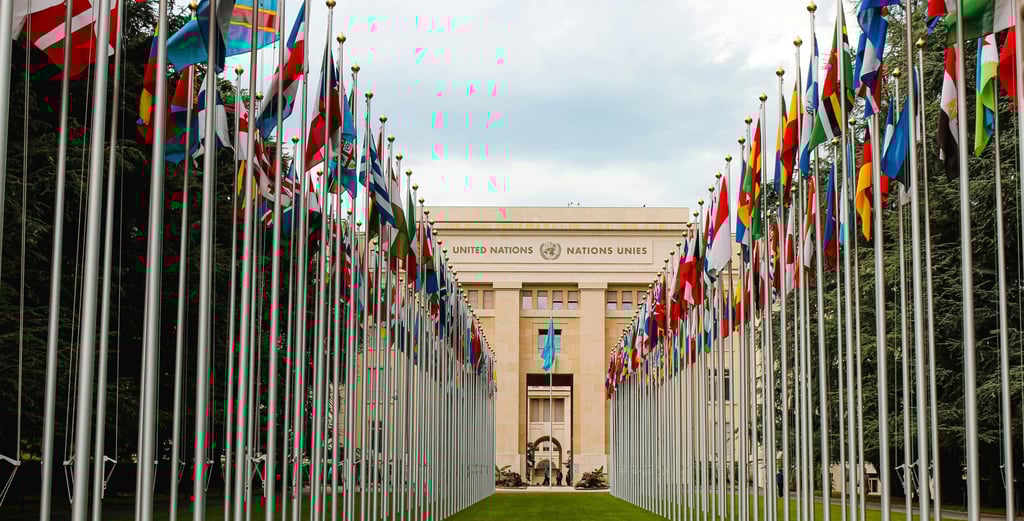
The proclamation emerged from a session conducted by the UN Educational, Scientific and Cultural Organisation (UNESCO) on November 23rd, held during its 41st Member States’ session in the vibrant city of Paris, France.
This remarkable recognition positions Swahili as the first African language to receive such accolades from the UN, further cementing its status as one of the African Union’s (AU) official languages.
UNESCO laid bare in its proposal, declaring Swahili as a top-tier global language—it boasts more than 200 million speakers. It stands tall among the world’s ten most prevalent languages.
The Roots and Reach of Swahili
Tracing its lineage back to East Africa, Swahili has transcended borders, now resonating through the streets and homes of over 14 countries, such as Tanzania, Kenya, Uganda, and extending its influence to regions beyond the African continent, including the Middle East nations of Oman and Yemen. Its global reach continues to expand as countries like South Africa and Botswana have incorporated it into their educational curricula, with others like Namibia considering similar inclusivity. This global impact of Swahili connects us all to a larger linguistic community.
Following UNESCO’s announcement, a wave of jubilation swept across social media, with language experts, universities, and everyday speakers expressing their pride. Tweets like, “We are so proud of this. We are looking forward to start teaching everyone Swahili,” from Hull Swahili Diaspora, and individual voices like Ombeni Aaron celebrating the language’s unique milestone in UN history filled the digital space with joy and celebration.
Professor Kennedy Gastorn, Tanzania’s Permanent Representative at the UN headquarters in New York, credited the announcement as a gift from Tanzania to the globe, noting the country’s pivotal role in the UNESCO effort. This recognition of Tanzania’s role in the global recognition of Swahili should fill us all with a sense of national pride and accomplishment.
Significance of July 7th
The date July 7th holds historical weight as it marks the day in 1954 when the Tanganyika African National Union (TANU), under the leadership of Julius Nyerere, recognized Swahili as a unifying force in the battle for independence. Despite Tanzania boasting over 120 languages, Swahili was selected for its power to unite.
Dr Leonard Muaka, Howard University’s professor of Swahili and Linguistics and President of the Global Association for the Promotion of Swahili (CHAUKIDU), highlighted how the country’s linguistic diversity found a harmonising voice in Swahili.
Swahili and Its Global Trajectory
Migration patterns have propelled the expansion of Swahili well beyond African borders. Dr. Muaka elucidated how refugees, having picked up the language through immersion, carried it with them, nurturing Swahili-speaking communities globally, including in the United States.
The Flourishing of Swahili in America
At Howard University, a student could walk into a classroom and be greeted in Swahili. This scenario is becoming more common as over 100 US educational institutions offer language courses. Swahili has sparked the curiosity of countless students like Kate Mensah, an American-Ghanaian pursuing her passion for languages, who has set her sights on diving deeper into East African culture.
Nearly 90,000 US residents now converse in Swahili, illustrating the language’s vibrant presence in the country. Even Dr. Melanie Zeck from the US Library of Congress shares her intriguing journey of mastering Swahili and applying it on an international stage.
The Language’s Enduring Legacy
Swahili’s history with American academia dates back to 1961, with the University of California, Los Angeles (UCLA) being the first to introduce it. Today, the language’s structure and grammar captivate those interested in linguistic diversity. In this language, a single Swahili word like “Hamjambo?” speaks volumes compared to its English translation “How are you?”.
As the Swahili-speaking world anticipates the celebration of its language on July 7th, we glimpse a unique and resilient culture finding a voice on a rapidly globalising stage. Whether through language institutes, social media, or individual quests for linguistic conquest, the ripple effects of UNESCO’s recognition indicate a language that’s not just surviving—but thriving.
Office
ST MARY'S PADDOCK, WELLINGBOROUGH, NORTHANTS NN8 1HJ
sPeak to a Real Human
+44 (0) 7427 376 433
© 2025. All rights reserved.
Our Credentials and Accreditation
Registered in England Co No. 08290846 A service owned by Export Trade Services Ltd.